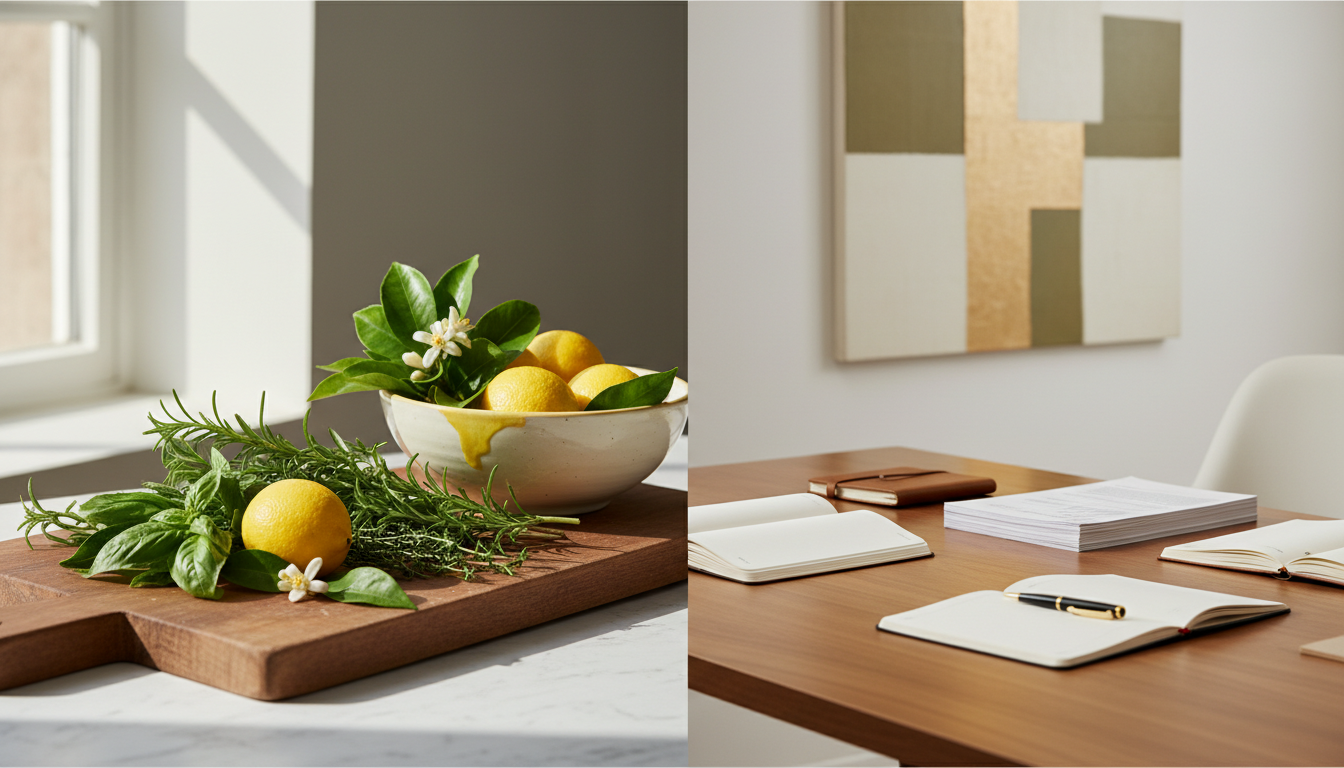
Signature Blend: Morning Porch, Our Lemon, Basil, and Peppermint Recipe
There is a particular quality to early morning air on a porch in late spring. It is cool, green-edged, and just beginning to warm. This blend was built to bring that feeling indoors, drop by drop. Our Morning Porch lemon oil blend pairs the bright, sun-warmed lift of cold-pressed organic lemon with the green herbaceous depth of basil and the crisp, clean finish of peppermint. The result is a lemon diffuser blend that feels genuinely alive rather than simply pleasant.
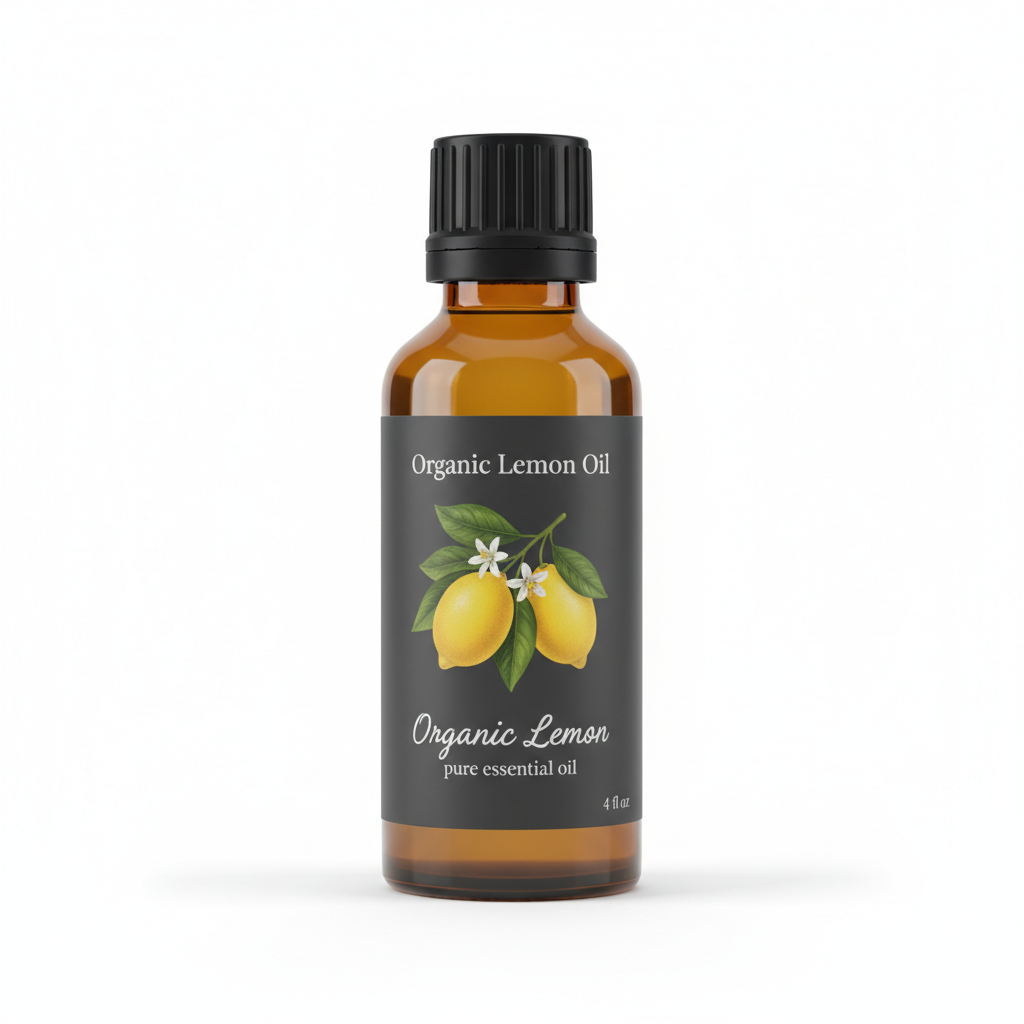
Organic Lemon Essential Oil
Our own Organic Lemon Essential Oil, in sizes from 0.5 oz to bulk.
From $15.99
Shop Now →This guide covers everything: why each ingredient earns its place, precise measurements, step-by-step blending instructions, safe dilution ratios for topical applications, storage guidance, and three seasonal riffs you can make your own.
The Anchor Oil: Organic Lemon, Cold-Pressed (Sunshine Pressed)
Cold-pressed lemon oil occupies a different sensory world than steam-distilled citrus. The pressing process lifts the full complexity of the peel directly into the oil: the bright top note everyone recognizes, but also a faintly waxy, almost creamy undertone that softens the sharpness. Our Organic Sunshine Pressed Lemon oil is sourced from certified organic groves and pressed without heat, which preserves the limonene-rich character that gives the oil its signature lift in a diffuser.
In a citrus herb diffuser recipe like this one, lemon plays the role of opener. It is the first thing you notice when the diffuser begins to mist. It pulls the room's atmosphere upward before the supporting notes settle in. For a deeper look at how lemon pairs with other botanicals across different categories, see our complete pairing guide for lemon oil.
The Supporting Cast
Sweet Basil Essential Oil
Basil brings a green, slightly spiced herbaceousness that anchors lemon without dulling it. The variety matters here. Sweet basil (Ocimum basilicum, linalool chemotype) carries a softer, almost floral green quality compared to the sharper estragole-dominant types. It reads as fresh herb rather than licorice, which is exactly what this blend needs. Basil sits in the middle of the aromatic arc, bridging the bright citrus top and the cool finish of peppermint.
Peppermint Essential Oil
Peppermint is the closing note. In diffusion, it lingers after the citrus has begun to fade, leaving a clean, airy finish in the room. Used at the right proportion (and the proportion matters greatly, as peppermint can easily dominate), it reads as a cool breeze rather than a candy counter. In this blend, it lifts the whole composition without taking over.
Full Ingredients List
For the Diffuser Blend Concentrate (makes approximately 5 mL, roughly 100 drops)
| Oil | Drops | Milliliters (approx.) | Role in Blend |
|---|---|---|---|
| Organic Lemon, Cold-Pressed | 60 drops | 3.0 mL | Top note, bright citrus anchor |
| Sweet Basil (linalool ct.) | 25 drops | 1.25 mL | Middle note, green herb bridge |
| Peppermint | 15 drops | 0.75 mL | Base-to-exit note, cool finish |
Diffuser use (single session): Add 4 to 6 drops of the concentrate to your diffuser water reservoir per 100 mL of water. Adjust to your space and diffuser model.
For a Topical Dilution (optional, body or pulse-point application)
If you want to apply this blend to skin, for example as a wrist or collarbone scent, dilute the concentrate in a carrier oil before use. See the safety section below for full guidance.
| Use Case | Concentrate Drops | Carrier Oil | Dilution Rate |
|---|---|---|---|
| General adult body use | 6 drops concentrate | 30 mL (1 oz) jojoba or fractionated coconut | ~1% |
| Pulse-point perfume (limited area) | 6 drops concentrate | 10 mL jojoba | ~3% |
Equipment
- One 5 mL or 10 mL dark amber glass bottle with orifice reducer and cap
- Calibrated dropper or pipette
- Ultrasonic or nebulizing diffuser
- Labels and a fine-tip pen (always label your blends)
Step-by-Step Blending Instructions
- Set up a clean workspace. Wipe down your surface, wash your hands, and gather all bottles and equipment. Essential oils can damage certain finishes and plastics, so work on glass, ceramic, or stainless steel if possible.
- Add the lemon oil first. Measure 60 drops of Organic Sunshine Pressed Lemon into your amber bottle. Lemon is the dominant note, so starting with it helps you gauge the full volume before adding supporting oils.
- Add the basil. Measure 25 drops of sweet basil (linalool ct.) directly into the same bottle. Cap loosely and give a gentle swirl. At this stage you will notice the green herbal quality beginning to soften the citrus brightness.
- Add the peppermint last. Measure 15 drops of peppermint. Replace the orifice reducer and cap securely.
- Roll, do not shake. Roll the capped bottle gently between your palms for 20 to 30 seconds. Shaking can introduce air bubbles and slightly alter the aromatic opening note during the first few minutes of diffusion. Rolling integrates the oils without agitation.
- Rest the blend. Set the bottle aside for at least 24 hours before first use. Freshly combined oils often smell slightly discordant on day one. Resting allows the aromatic molecules to marry. Many blenders wait 48 hours for a fuller read of the finished profile.
- Label immediately. Write the blend name, date blended, and ingredient list on the label before you forget. A blend made six months from now that looks identical will not tell you which bottle is which.
- Diffuse and enjoy. Add 4 to 6 drops to your diffuser per 100 mL water. Run in 30-to-60-minute intervals with breaks in between for best aromatic experience and to avoid olfactory fatigue.
Dilution Ratios, Patch Testing, and Safety Notes
Diffuser use of this blend is the most straightforward application. For topical use, several points deserve careful attention.
Cold-Pressed Lemon and Photosensitivity
Cold-pressed citrus oils, including our lemon, contain naturally occurring furanocoumarins. These compounds can cause the skin to become more sensitive to UV light when applied before sun exposure. If you use this blend in a topical dilution, avoid applying it to any skin that will be exposed to direct sunlight or UV sources (including tanning beds) for at least 12 hours after application. Steam-distilled lemon does not carry this concern, but our Sunshine Pressed oil is cold-pressed, so this guidance applies.
Peppermint Considerations
Peppermint contains menthol at meaningful concentrations. Keep topical applications away from the face, especially the nose and eyes. Peppermint is not recommended for topical use on young children. Consult a qualified healthcare provider before using this blend around infants, toddlers, or during pregnancy.
Patch Testing
For any new topical blend, perform a patch test before wider application. Apply a small amount of the diluted blend (not the concentrate) to the inner forearm. Wait 24 hours. If you notice any redness, itching, or irritation, discontinue use of the topical preparation. Diffuser use is generally well-tolerated, but if you find any of the individual oils irritating via inhalation, adjust the concentration or discontinue.
General Dilution Guidance
- 1% dilution (6 drops concentrate per 30 mL carrier): appropriate for general adult skin use over larger body areas
- 2% dilution (12 drops concentrate per 30 mL carrier): a common starting point for adult leave-on products applied to limited areas
- 3% dilution: pulse-point or small-area perfume applications for adults only
- Never apply the undiluted concentrate directly to skin
For more ways to bring this lemon oil blend into your home beyond the diffuser, our guide to using lemon oil at home covers room sprays, linen applications, and surface blends in practical detail.
Storage and Shelf Life
Store your Morning Porch concentrate in a dark amber or cobalt glass bottle, away from heat and direct light. A cool cabinet or drawer is ideal. A refrigerator works well for longer storage, though bring the bottle to room temperature before use.
Peppermint is generally stable and can last two to three years under good conditions. Sweet basil is somewhat more delicate, with a typical shelf life of one to two years. The limiting factor in this blend is the cold-pressed lemon oil. Cold-pressed citrus oils oxidize faster than steam-distilled oils and are generally best used within nine to twelve months of opening. Label your bottle with the blend date and plan to use the concentrate within that window for the best aromatic experience.
If the blend begins to smell flat, sharply chemical, or distinctly sour in a way that was not there when you first made it, the lemon has likely oxidized. Retire it from topical use and, if you prefer, you can still use a small amount in a cleaning blend. Our room-by-room spring cleaning guide has ideas for how to put older lemon oil to purposeful use around the house.
Variations on Morning Porch
Variation 1: Garden Gate (Warmer, Greener)
Swap the peppermint for rosemary (ct. camphor or ct. 1,8-cineole) at the same 15-drop proportion. Rosemary carries a similar clean, herbaceous quality to peppermint but reads as warm and woody rather than cool. The result is a lemon diffuser blend that leans into a kitchen-garden feeling, softer and more grounded than the original. Rosemary also harmonizes beautifully with basil in a way that feels completely natural.
Variation 2: Silver Morning (Brighter, More Floral)
Reduce basil to 15 drops and add 10 drops of bergamot (bergapten-free, if using topically) alongside the original peppermint at 15 drops. Bergamot brings a floral, slightly powdery citrus note that lifts the blend into a more refined, airy register. This version makes an excellent citrus herb diffuser recipe for a home office or reading room, where you want brightness without sharpness.
Variation 3: Late Summer Porch (Deeper, Resinous)
To the original formula, add 8 drops of frankincense. Specifically, we suggest Frankincense Serrata for this variation. Serrata originates primarily from India, where it is tapped from Boswellia serrata trees that grow in dry, rocky terrain. Its aroma profile is softer and more earthy than the Somali varieties, with a gentle balsamic warmth that does not compete with citrus the way a sharper resin might. It lengthens the blend considerably, adding a slow, grounding base note that keeps the lemon and peppermint from feeling fleeting. This variation suits late summer evenings, when the air is still warm but beginning to hint at something cooler ahead. Reduce lemon to 52 drops to keep the proportions balanced with the added resin.
A Note on Sourcing and Quality
This blend works best when the individual oils are genuinely clean. Cold-pressed lemon oil in particular can vary significantly depending on the growing region, the harvest timing, and whether the fruit was organically grown. Conventionally grown citrus is among the more heavily sprayed crops, and while the pressing process does not extract pesticide residues in the same way that eating the fruit might involve, we believe organic sourcing reflects the overall intention of a thoughtfully made blend. Our Organic Sunshine Pressed Lemon is certified organic at the source, pressed to order where possible, and tested for purity.
The same attention applies to the basil and peppermint you choose. Look for oils with clear botanical names, chemotype information where relevant (especially for basil), and country of origin listed on the label. A supplier willing to share that information is a supplier worth returning to.
Making It a Morning Practice
The simplest way to use Morning Porch is to start the diffuser before you do anything else. Set it going while the coffee brews, while you open the windows, while the household is still quiet. The citrus top note moves through the room quickly and the basil follows, then the peppermint settles into the background just as the morning properly begins. It takes about ten minutes to fully express itself in a medium-sized room.
Some people keep a small pre-diluted roller of the blend at 1% in jojoba and apply it to their wrists before stepping outside. Others make a simple linen spray by combining 10 drops of the concentrate with 100 mL of distilled water and a small amount of unscented liquid solubilizer, then misting it onto curtains near an open window. Both are entirely workable. The concentrate is the core; how you use it is yours to decide.
Morning Porch is a simple formula. Three oils, one central idea, and enough clarity in the proportions to make it easy to scale up or adjust. Start with the recipe as written, live with it for a week, and then begin changing things. That is how a signature blend actually becomes yours.