Batch Notes: Testing Organic Lemon Oil in a Cold Process Soap Cure
Every soapmaker who has ever poured a citrus batch has asked some version of the same question a few weeks later, standing over a rack of bars that smelled bright and lemony on day one and smell like almost nothing today. We hear it constantly from people working with our lemon essential oil: does it actually survive saponification, or is that bright top note just gone by the time the bars are ready to sell? We decided to stop answering from memory and log an actual batch, start to finish, so we'd have real notes instead of a hunch.
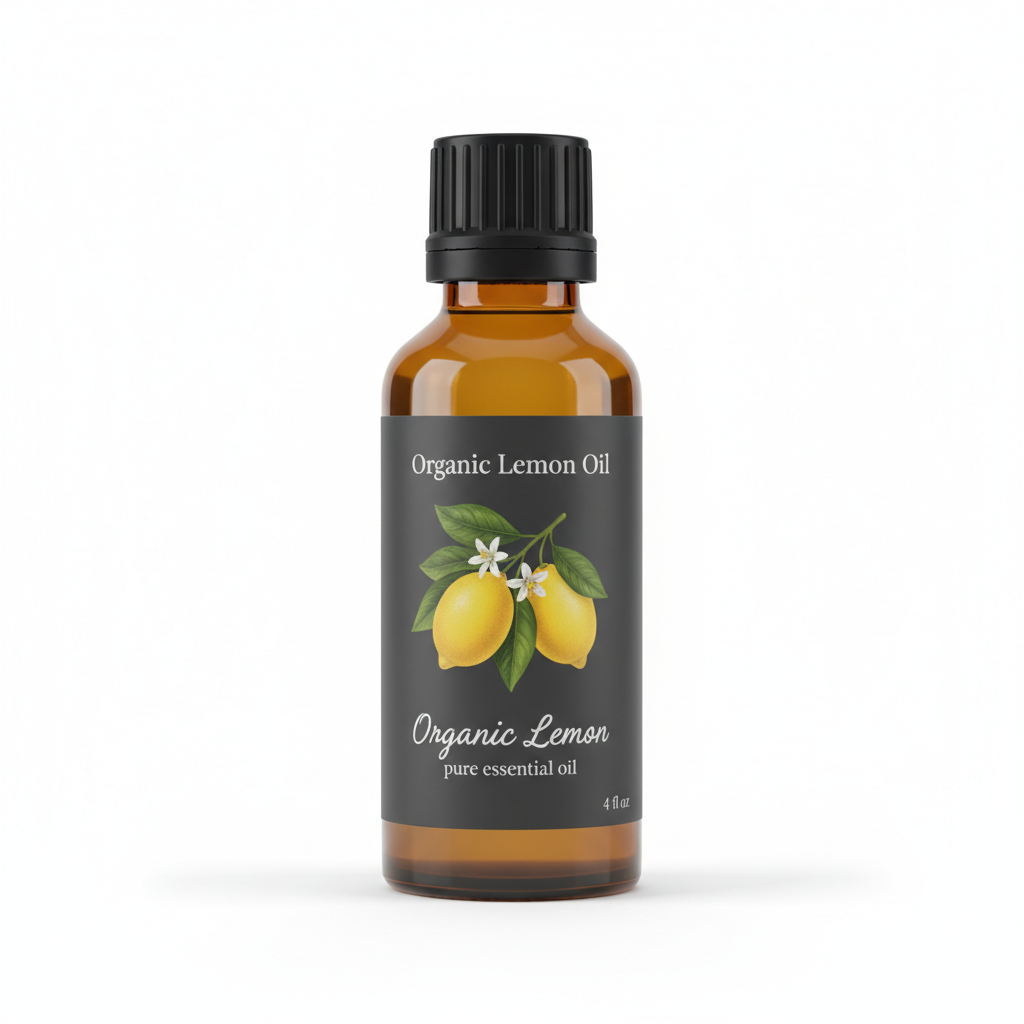
Organic Lemon Essential Oil
Our own Organic Lemon Essential Oil, in sizes from 0.5 oz to bulk.
From $13.99
Shop Now →This is not a lab study. We don't have gas chromatography equipment sitting next to the soap molds, and we're not going to pretend otherwise. What we have is a controlled small-batch test, a scale, a pH strip kit, and a panel of five people willing to smell the same bars every week for two months and write down what they noticed. That's the level of rigor here: careful, honest, and openly limited.
The Question We Kept Getting Asked
The complaint we hear most often isn't that lemon oil smells wrong in soap. It's that it smells right for about a week and then fades to almost nothing, while a lavender or patchouli bar poured the same day still carries its scent months later. Soapmakers wanted to know whether that's a flaw in the process, a dosing problem, or just an unavoidable feature of working with citrus oils in an alkaline environment.
So the working question behind this whole project was simple: does lemon oil survive saponification well enough to still be noticeable by the time a cold process bar finishes its resting period, and if the scent does fade, is there anything a soapmaker can reasonably do about it?
Why Citrus Oils Have a Reputation Problem in Cold Process
Before we describe what we did, it's worth explaining why this is even a question. Lemon essential oil is expressed from the peel and is mostly made up of a compound called limonene, along with smaller amounts of other light, volatile terpenes. Those molecules are what give lemon oil its sharp, zesty top note, and they're also small and unstable compared to heavier aromatic compounds found in oils like patchouli or vetiver.
Cold process soap batter starts out highly alkaline, often in the pH 13 to 14 range right after the lye and oils combine, and it stays warm and chemically active for the first day or two as saponification proceeds. Raw citrus terpenes are known to be sensitive to that kind of high-pH, high-heat environment. Some research and a good deal of soapmaker experience suggests the combination of alkalinity, residual heat, and simple evaporation over a multi-week resting period is what drains the brightness out of a citrus scent, well before oxidation from air exposure even gets a chance to finish the job.
None of this is unique to our oil specifically. It's a structural challenge with citrus oils as a category in cold process work, and it's the reason so many soapmakers reach for citrus fragrance oils instead of the essential oil version, or blend the essential oil with a fixative to try to hold onto some of the scent.
Setting Up Our Batch Notes
We kept the base recipe identical across three batches, a fairly standard blend of olive, coconut, and sustainable palm alternative oils at a modest superfat, so the only variables we were tracking were tied to the lemon oil itself. Here's how the three batches broke down.
| Batch | Lemon Oil Usage Rate | Addition Stage | Fixative Added |
|---|---|---|---|
| Batch A | 3% of oil weight | At light trace | None |
| Batch B | 5% of oil weight | At light trace | None |
| Batch C | 3% of oil weight | At light trace | Small amount of patchouli oil as an anchor |
We chose 3% and 5% because those sit within the usage rates commonly discussed for essential oils in cold process soap, and we wanted to see whether simply using more oil bought any meaningful staying power, or whether it just meant a stronger scent for the first few days followed by the same fade everyone reports. Batch C was our attempt to test the common soapmaker workaround of pairing a fast-fading top note with a heavier base note oil that holds on longer, in the hope that even a faint trace of lemon riding alongside the patchouli would read as brighter than patchouli alone.
Every bar was cut, weighed, and placed on the same rack in the same room, away from direct sunlight, and left to go through a standard four to six week resting and drying period before we did any hard evaluation, though we did check in earlier out of curiosity.
Observations Through the Aging Window
Day 1. All three batches smelled distinctly lemony immediately after unmolding, with Batch B noticeably stronger than A, as expected from the higher usage rate. Batch C smelled more like a citrus-brightened patchouli than a true lemon bar, which tracked with what we'd guessed going in.
Our panel described the scent at this stage as sharp, clean, and true to fresh lemon zest, with one note across all three batches: even Batch B, at the higher usage rate, wasn't overpoweringly strong. That's consistent with what many soapmakers report anecdotally about citrus oils reading lighter in finished soap than the bottle alone suggests.
Week 1. This is where we started to notice the pattern our customers describe. Batch A had softened considerably, still recognizable as citrus but faint, more of a background note than a clear identity. Batch B had softened too, but less dramatically, and panel members could still identify it as lemon without much effort. Batch C's citrus brightness had mostly receded, leaving a scent that read as patchouli with only a faint lift.
Week 4. By the midpoint of the resting period, Batch A was difficult for most panel members to identify as lemon at all without prompting. Batch B still carried a light citrus note that people picked up on, though several described it as more of an impression than a distinct scent. Batch C had essentially settled into a patchouli-forward profile with only the faintest citrus lift remaining, which a couple of panel members said they wouldn't have noticed if they hadn't been told to look for it.
Week 8. At the end of the full resting window, Batch A's lemon scent had faded to something close to undetectable for most of the panel. Batch B held on to a light, soft citrus note that people could still name, though it was a fraction of its day-one strength. Batch C read almost entirely as an earthy, warm bar with citrus playing no more than a supporting role, if that.
What We Think Is Happening
We want to be careful here, because we're describing observations from a small, informal batch test, not a controlled laboratory analysis, and we'd encourage anyone reading this to treat our notes as a starting point for their own experimentation rather than a settled conclusion.
That said, our observations line up with the general explanation soapmakers and formulators have offered for a while: the light terpene compounds that make lemon oil smell like lemon appear to be particularly vulnerable to the high alkalinity of fresh soap batter, and whatever survives that initial exposure then has weeks of open-air evaporation to contend with during the resting period. Usage rate seemed to matter somewhat, since Batch B outlasted Batch A at every checkpoint, but doubling the amount didn't come close to doubling the staying power. That points to a rate of loss that isn't simply proportional to how much oil you start with.
The fixative approach in Batch C is worth a second look in future testing. It didn't preserve a strong standalone lemon character, but the patchouli base did seem to carry a faint citrus lift further into the resting window than Batch A managed on its own, which suggests pairing strategies might be a more productive line of testing than simply increasing the essential oil percentage.
Practical Notes for Soapmakers
A few takeaways we'd feel comfortable sharing from this round of testing, offered as practical observations rather than guarantees:
- If a strong, identifiable lemon scent at the end of the resting period is the goal, our notes suggest leaning toward the higher end of commonly recommended usage rates rather than the lower end, though even that only slows the fade rather than stopping it.
- Pairing lemon oil with a heavier, longer-lasting base note may help extend a citrus impression, even if the bar no longer reads as purely lemon by the end of the cure.
- Setting expectations before the pour matters. A bar that smells bright and lemony on day one is not necessarily going to smell that way on the shelf eight weeks later, and it may be worth communicating that to customers if you sell citrus bars.
- Always calculate essential oil usage rates by weight of the total oils in the recipe, not by volume or by guesswork, and stay within the ranges generally recommended for skin-contact leave-on and rinse-off products.
- Do a patch test with any new soap formulation on a small area of skin before broader use, and discontinue use if any irritation appears. This applies to any essential oil blend, not just citrus.
- People who are pregnant, nursing, or managing any ongoing skin sensitivity should check with a qualified healthcare provider before introducing a new essential oil into a routine, cosmetic or otherwise.
Where This Leaves Us
Our batch notes support what a lot of soapmakers already suspected anecdotally: lemon essential oil does not appear to hold its scent through a full cold process resting period the way heavier, base-note oils do, and no usage rate we tested fully solved that on its own. What we didn't expect was how much of the fade seemed to happen in the first week, well before the bars were even ready to use, which points toward the early saponification window as the more significant loss point rather than the slow evaporation that follows.
We'd like to test this further with a wider range of fixative pairings, a side-by-side comparison against a citrus fragrance oil for reference, and possibly a batch where the lemon oil is added at a cooler, later stage of trace to see whether timing changes the outcome. If you're running your own citrus batch, we'd genuinely like to hear what you observe. This is exactly the kind of question that gets better answers the more soapmakers compare notes.